Introduction
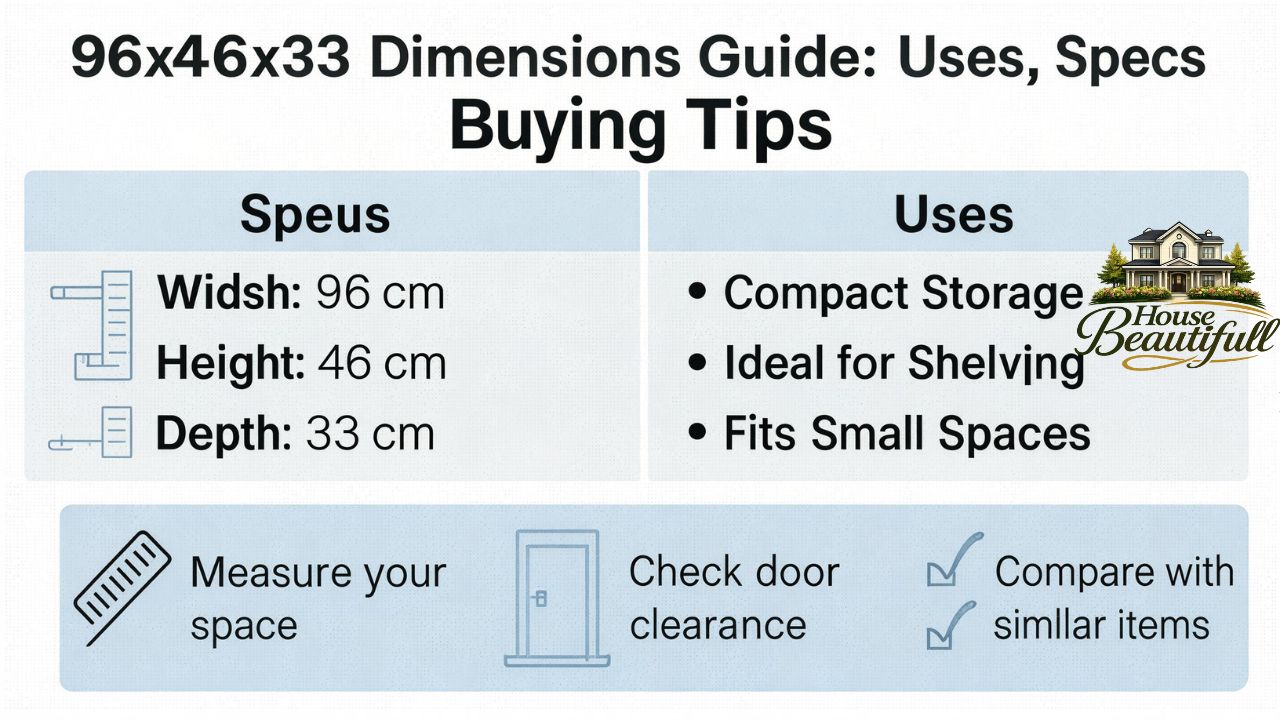
At first glance, 96x46x33 might look like just another string of numbers—but in the world of dimensions, it can define everything from storage capacity to project feasibility. Whether you’re dealing with shipping containers, furniture design, or industrial equipment, understanding what this size represents can save you time, money, and frustration.
If you’ve come across 96x46x33 while shopping, planning a build, or reviewing specs, you’re likely wondering: what exactly does it mean, and how do you use it effectively? This guide breaks it down in a way that feels practical, relatable, and easy to apply in real-life situations.
By the end of this article, you’ll not only understand the meaning of these dimensions but also know how to choose, compare, and work with them confidently.
Understanding What 96x46x33 Really Means
When you see 96x46x33, it typically refers to three measurements—length, width, and height. These values are usually expressed in inches unless otherwise specified.
In simple terms:
- 96 = Length
- 46 = Width
- 33 = Height
This format is standard across industries, making it easy to interpret once you know the order.
The importance of this format lies in its consistency. Whether you’re buying storage boxes or analyzing equipment specs, the sequence helps avoid confusion and ensures accuracy in planning.
Another key point is unit awareness. While inches are most common, some industries use centimeters or millimeters. Always double-check units before making decisions based on 96x46x33, especially in international contexts.
Why Dimensions Like 96x46x33 Matter in Real Life
Dimensions aren’t just numbers—they directly impact usability and efficiency.
Imagine ordering a storage unit without checking its size. A difference of even a few inches could mean the item doesn’t fit your space or fails to hold what you need.
Common Impacts of Dimensions:
- Space planning: Ensures items fit into rooms, trucks, or shelves
- Shipping costs: Larger dimensions often increase fees
- Storage efficiency: Proper sizing avoids wasted space
- Functionality: Determines whether an item meets your needs
For example, a 96x46x33 container could be ideal for large-scale storage but impractical for small apartments.

Understanding these dimensions allows you to visualize scale before committing to a purchase or project.
Common Uses of 96x46x33 Dimensions
The 96x46x33 size appears across multiple industries due to its balanced proportions.
Storage and Organization
This dimension is commonly used for:
- Large storage bins
- Industrial shelving units
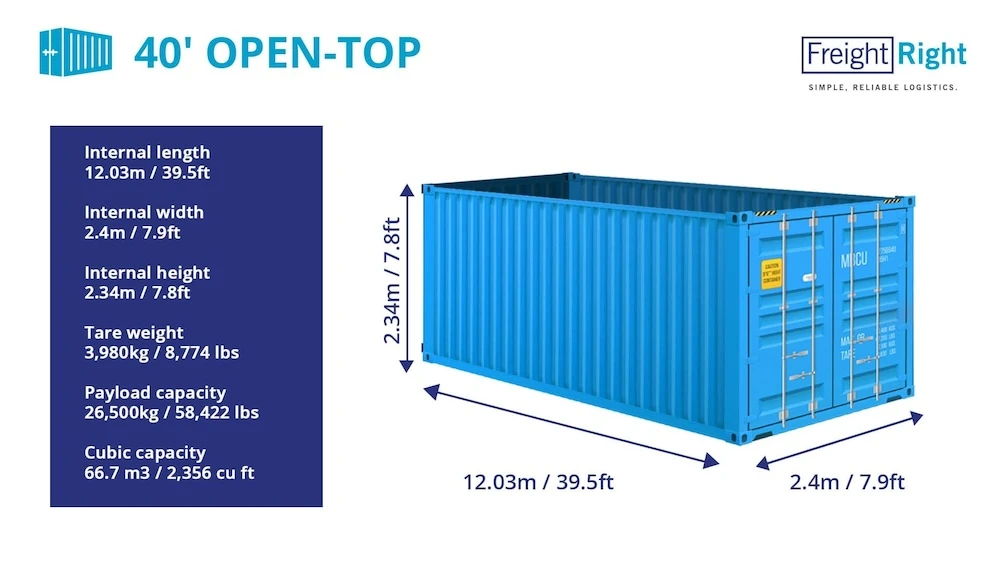
- Warehouse containers
It offers enough volume to store bulky items without becoming unmanageable.
Shipping and Logistics
In logistics, 96x46x33 may represent:
- Freight boxes
- Pallet-sized containers
- Transport crates
Its size often aligns well with standard pallet systems, making it efficient for stacking and transport.
Furniture and Design
Designers may use 96x46x33 for:
- Custom cabinets
- Workbenches
- Display units
Its proportions provide a wide surface area with moderate height, making it versatile.
How to Visualize 96x46x33 in Practical Terms
Numbers alone can feel abstract. Let’s translate 96x46x33 into something more tangible.
- 96 inches ≈ 8 feet (about the length of a large sofa)
- 46 inches ≈ nearly 4 feet (similar to a desk width)
- 33 inches ≈ just under 3 feet (about waist height)
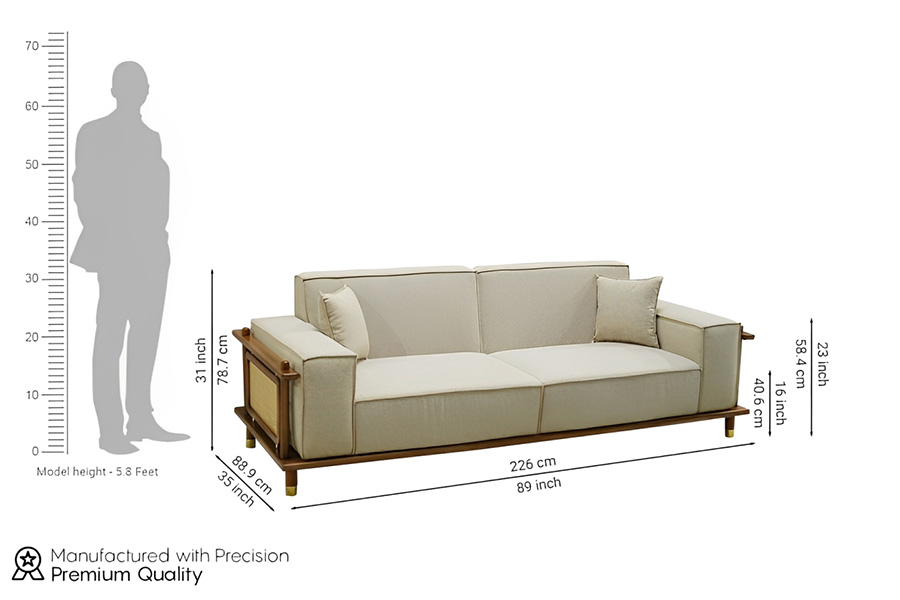
So, a 96x46x33 object is roughly:
- As long as a couch
- As wide as a desk
- As tall as a table
This makes it substantial but still manageable in many environments.
Visualizing dimensions this way helps you avoid surprises when the item arrives.
Choosing the Right Material for 96x46x33 Items
The usefulness of 96x46x33 isn’t just about size—it’s also about material.
Common Material Options:
- Plastic: Lightweight, affordable, moisture-resistant
- Wood: Durable, aesthetic, suitable for furniture
- Metal: Strong, ideal for industrial use
- Composite materials: Balanced strength and weight
Each material affects:
- Weight
- Durability
- Cost
- Maintenance
For example, a plastic 96x46x33 storage box may be easy to move, while a metal version offers superior strength for heavy loads.

Key Factors to Consider Before Buying
Before committing to a 96x46x33 item, think beyond dimensions.
1. Available Space
Measure your space carefully. Leave room for:
- Movement
- Accessibility
- Ventilation
2. Weight Capacity
Different builds support different loads. Always check specifications.
3. Purpose
Ask yourself:
- Is it for storage, transport, or display?
- Will it be used indoors or outdoors?
4. Portability
Large items can be difficult to move. Consider:
- Wheels
- Handles
- Assembly requirements
5. Budget
Prices vary widely depending on material and build quality.
Comparing 96x46x33 With Other Sizes
Understanding how 96x46x33 compares to other dimensions helps you make better decisions.
Smaller Sizes
- Easier to move
- Limited capacity
- Better for tight spaces
Larger Sizes
- More storage
- Higher cost
- Harder to transport
The 96x46x33 size sits comfortably in the “large but manageable” category, making it a popular choice.
Practical Tips for Using 96x46x33 Efficiently
To get the most out of this size, consider these strategies:
Optimize Internal Space
- Use dividers
- Stack items strategically
- Group similar objects
Ensure Stability
- Place heavier items at the bottom
- Avoid uneven loading
Maintain Accessibility
- Keep frequently used items near the top
- Label contents clearly
Protect Contents
- Use padding for fragile items
- Ensure proper sealing if needed

FAQs
Frequently Asked Questions
What does 96x46x33 mean exactly?
It represents length, width, and height—usually in inches—defining the overall size of an object.
Is 96x46x33 considered large?
Yes, it falls into the large-size category and is suitable for storage, shipping, and industrial use.
Can 96x46x33 fit in a standard room?
It depends on the room size, but it can fit in medium to large spaces with proper planning.
What materials are best for this size?
Plastic for lightweight use, metal for heavy-duty applications, and wood for furniture or aesthetic purposes.
Is 96x46x33 suitable for shipping?
Yes, it’s commonly used in logistics, especially for pallet-based shipping systems.
How do I measure something as 96x46x33?
Use a measuring tape and record length, width, and height in that specific order.
Can I customize items with these dimensions?
Absolutely. Many manufacturers offer custom builds based on specific dimension requirements.
What industries commonly use 96x46x33?
Logistics, manufacturing, furniture design, and storage solutions frequently use this size.
Conclusion
Understanding 96x46x33 goes far beyond reading numbers—it’s about visualizing space, making smarter decisions, and ensuring functionality in real-world applications. Whether you’re organizing a warehouse, choosing a storage solution, or planning a design project, knowing how to interpret and use these dimensions gives you a clear advantage.
By breaking down its meaning, comparing it to real-world objects, and exploring its applications, you’re now equipped to approach this size with confidence. The next time you encounter 96x46x33, it won’t feel like a random measurement—it’ll feel like a practical tool you know exactly how to use.